


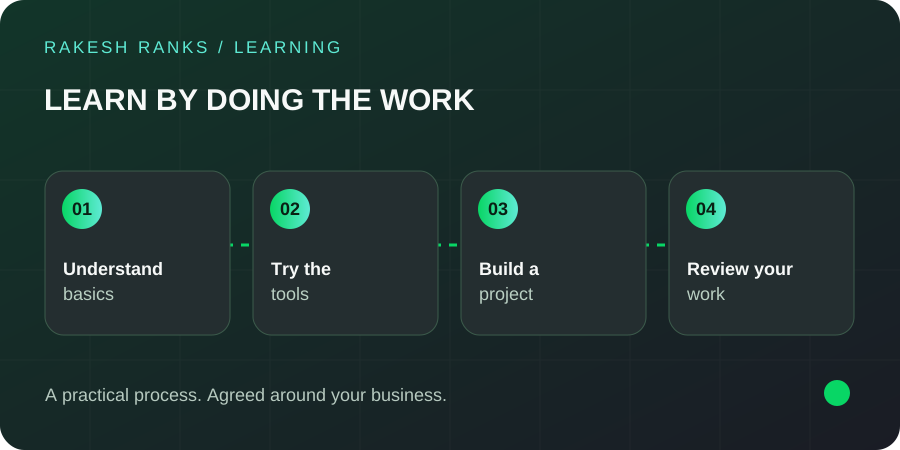
- 01Understand basics
- 02Try the tools
- 03Build a project
- 04Review your work
Is digital marketing a good career for you?
People often ask me whether digital marketing is a good-paying job. My answer starts with the work. You will spend time understanding a business, writing or reviewing content, using tools, testing ideas and explaining what happened. Some days involve creative decisions. Other days involve fixing a tracking issue or checking a spreadsheet.
If you enjoy that combination, the field is worth exploring. You do not need to be an expert in every channel at the start. You do need patience, clear communication and the willingness to keep learning. A course alone cannot replace practice.
Which digital marketing roles can you explore?
- SEO: researching searches, improving pages, checking technical issues and reviewing search performance.
- Paid advertising: planning campaigns, setting up tracking, reviewing spend and improving landing pages.
- Social media: researching audiences, planning content, coordinating creatives and handling conversations.
- Content: researching topics, writing useful pages, editing and keeping information accurate.
- Analytics: checking data quality, building reports and helping the team interpret results.
Smaller businesses may combine these responsibilities into one role. Larger teams may hire specialists. Read the actual job description before deciding that the title tells you everything.
What affects digital marketing pay?
There is no single salary that represents this whole field. An entry-level content role, a campaign manager responsible for an advertising budget and an experienced SEO consultant have different responsibilities. Location, company size, industry and demonstrated work also affect offers.
Instead of relying on a headline salary range, collect current vacancies for one role in your target city. Compare responsibilities, required tools, experience and the published pay where available. Keep fixed salary, incentives and take-home pay separate when you review an offer.
You can use the National Career Service to explore career and employment information. For a broader official introduction, the Directorate General of Employment publishes career literature, including digital marketing resources. These are starting points for research, not a promise of an offer.
Build proof that you can do the work
Pick a small project you can explain properly. Build a simple website, map its pages to customer questions and write a few helpful pieces of content. Check how the pages appear on a phone and whether a visitor can find the next step.
- Explain the business or audience you chose.
- Record the problem and your reasoning.
- Show the work you personally completed.
- Separate real observations from sample or practice data.
- Write what you would improve next.
A small honest project is more useful than a portfolio full of impressive numbers you cannot explain. Do not present a practice campaign as paid client work.

How should beginners use AI tools?
Use AI to explore questions, organise research or draft alternatives. Then check the facts, edit the language and make the decision yourself. You should be able to explain why a page, advert or report is useful without relying on the tool’s answer.
For SEO, learn the foundations of search before promising special AI visibility. For advertising, understand the offer, audience, measurement and cost. Tools change; these questions remain part of the job.
A practical way to start
Try introductory learning, choose one area and complete a project before paying for a large programme. If you decide to join a course, ask who reviews your work and how practical assignments are assessed. Allow time to practise outside class.
Read my Hyderabad institute comparison guide for questions to ask. If freelancing interests you, start with how to build an SEO freelancing service. You can also see the digital marketing work I offer to businesses.
Common questions
Do I need coding to start digital marketing?
Many entry roles do not require you to build software. Website basics and an understanding of how pages work are still useful. Technical roles may require deeper knowledge.
Can a course guarantee a high-paying job?
A course can support your learning, but a job offer depends on the employer and your demonstrated skills. Check any placement claim and its terms before paying.